Oakley
× Mad Max
A 20-second film I made with generative tools, and how I would produce it for real: shot by shot, deciding what to shoot and what to generate, with two budgets and two rights holders to answer to.
What I actually made
The 20-second film above: six shots, made in one day with Higgsfield. The goggles were generated from a reference image of a real Oakley model, to keep the product as close to the real one as possible. No crew, no client, no budget.
What this page adds
A study, not a credit. The brief, the budgets and the production choices below are hypothetical: how I would make the same film with real people, real vehicles and real money.
The hypothetical brief
The idea
A fugitive alone on a dry lake. He lowers his goggles, scans the horizon, and sees the war party in the lens before it reaches him. He has time to run. The line: “It's about knowing when to run.”
The product isn't shown off: it's the reason he survives. The whole brief lives in one image, the convoy reflected in the goggles. In production terms, that same image is also the most expensive shot in the film.
What I'd shoot, what I'd generate
The rule behind every choice: shoot for real wherever the face or the product is close to camera; generate wherever the character is small, or the scene is too expensive or dangerous to stage. It's also the answer to the main limit I hit making the film: keeping the character consistent from shot to shot.
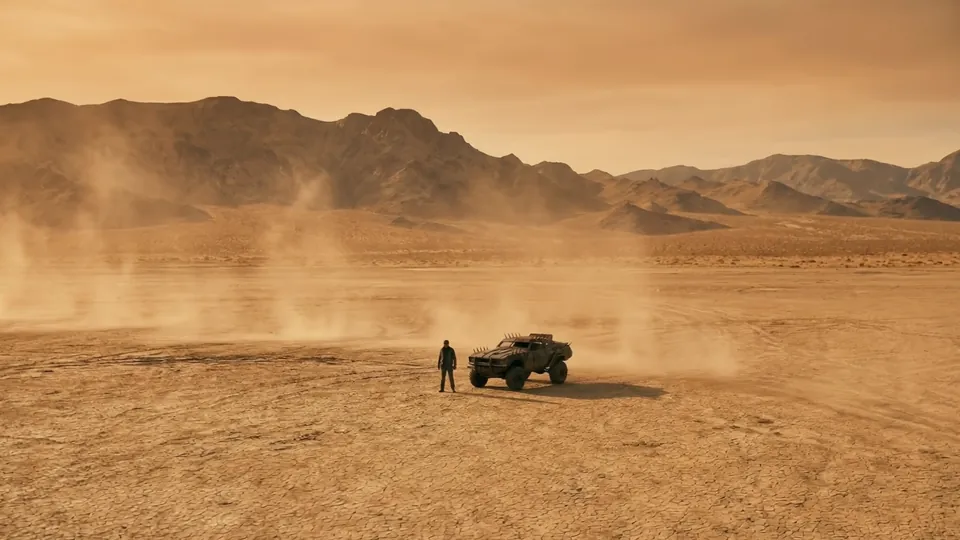
The wide
The fugitive and his car, alone on a dry lake, dust devils behind him.
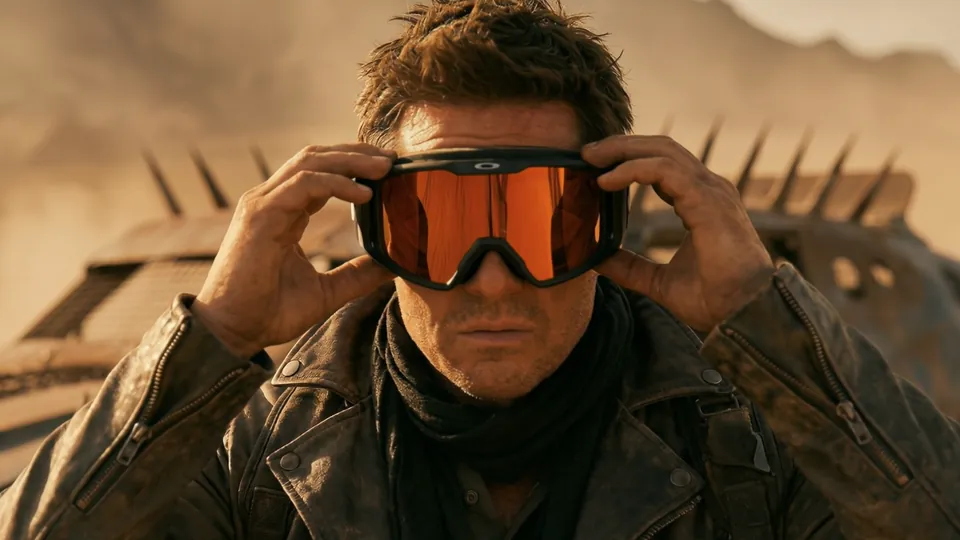
The goggles
He lowers the goggles: the product's first close-up.
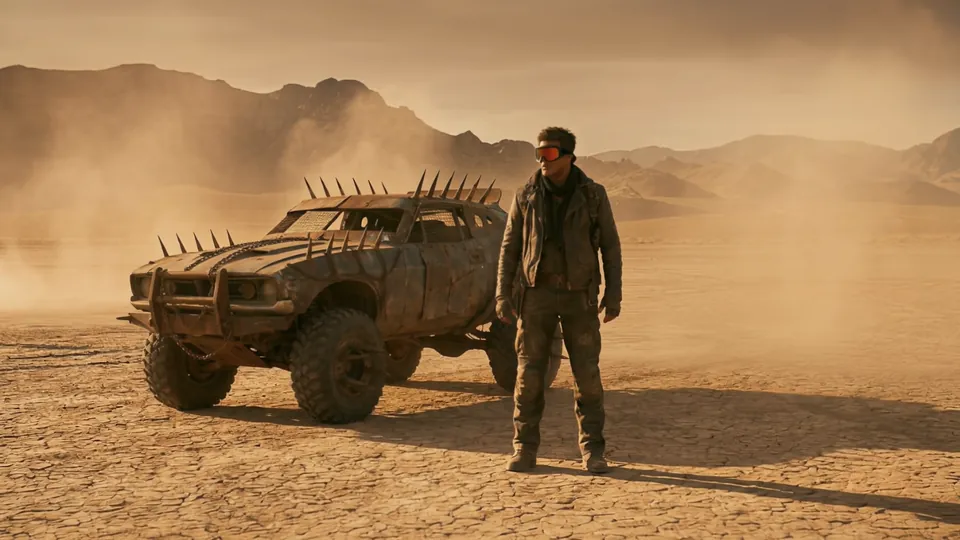
Scanning the horizon
He stands by the car, looking out over the lake.
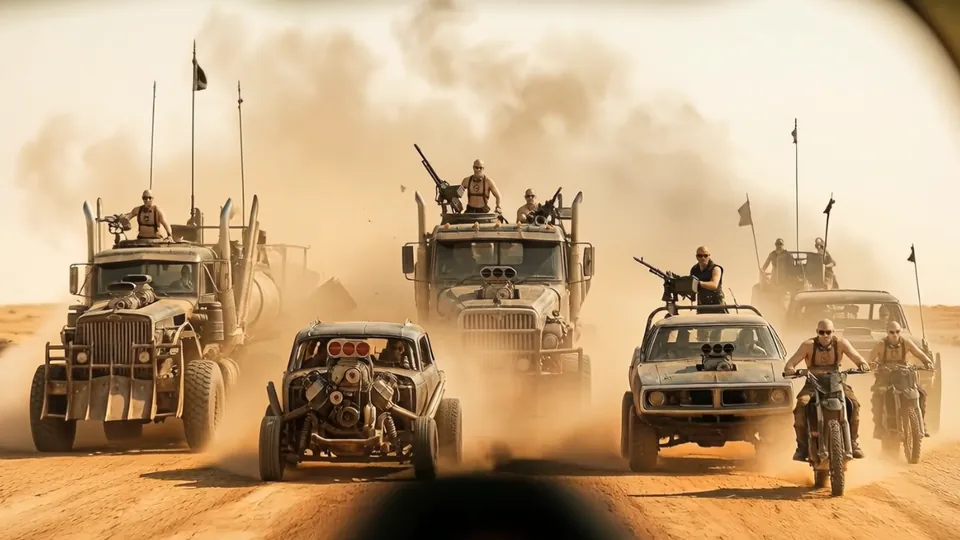
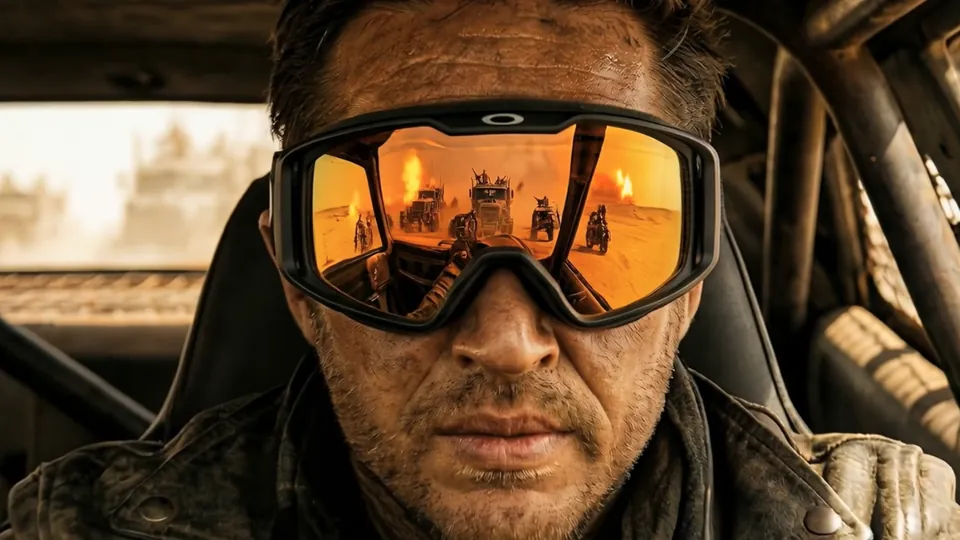
The reflection
Through the lens we see the convoy coming; the camera pulls back and it's reflected in his goggles.
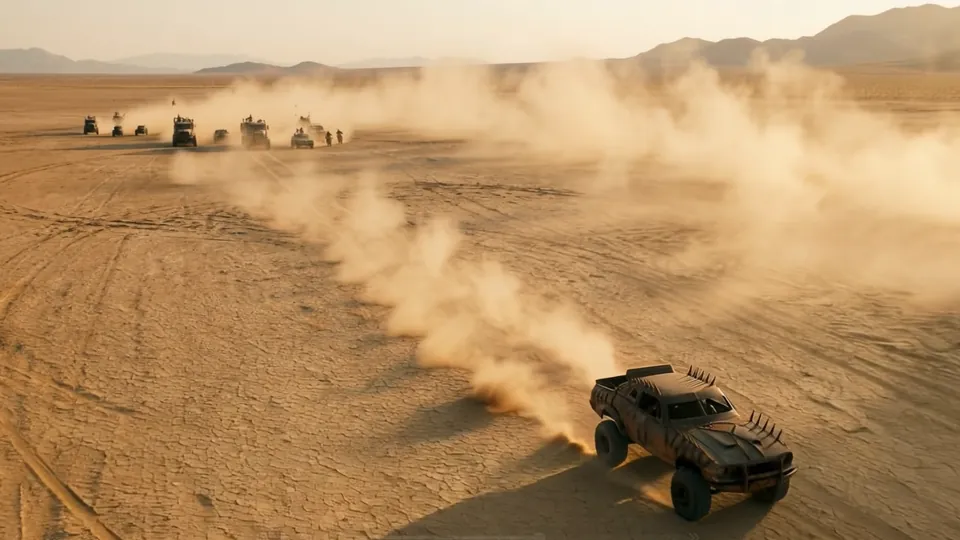
The escape
Aerial: he speeds off, the convoy in pursuit.
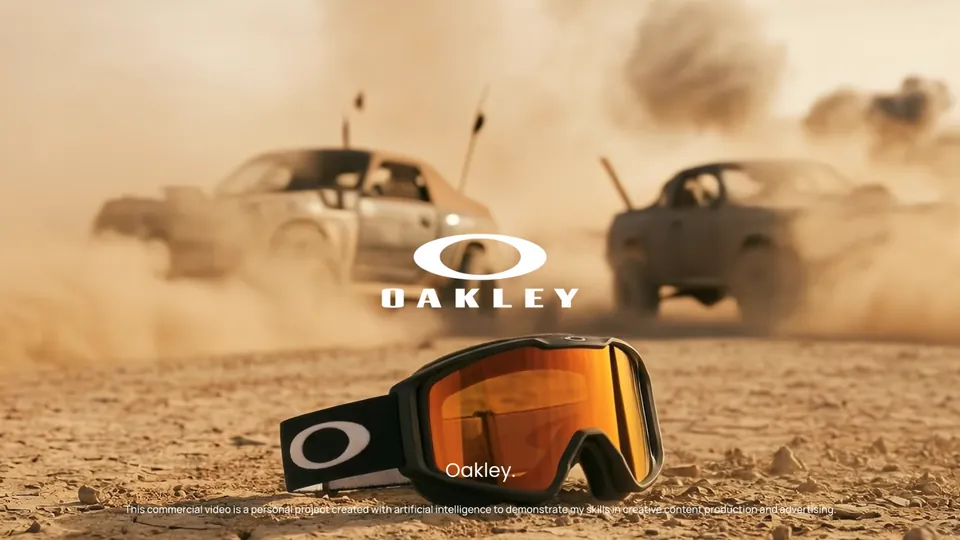
The packshot
The goggles in the dust, logo and end line.
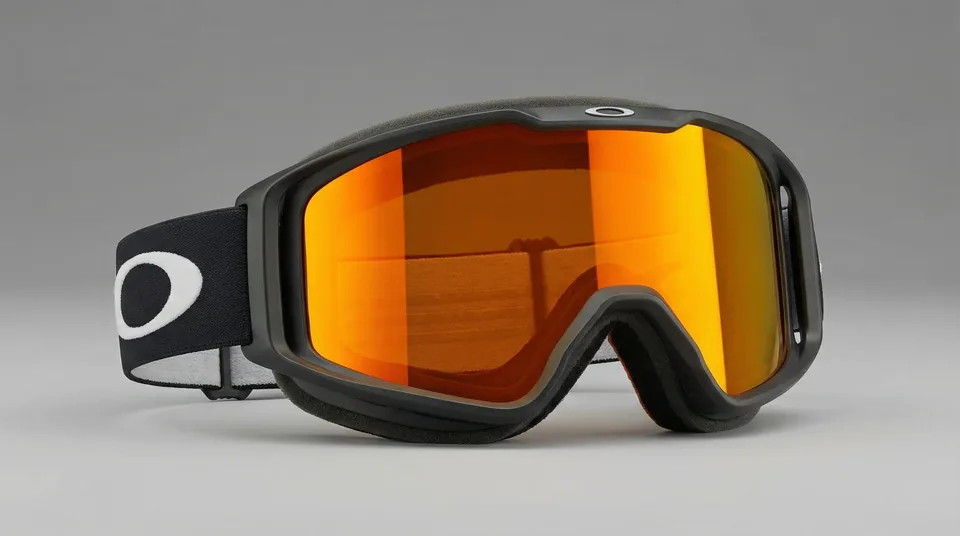
The goggles in my film were generated from this reference of a real Oakley model. For a real client the product is always the real thing, photographed: any change in shape, lens colour or logo is the first thing the brand would catch.
Two ways to make it
| Line | A — Shoot on location | A · €k | B — Hybrid: real actor and product, generated world | B · €k |
|---|---|---|---|---|
| Pre-production | Scouting a dry lake, permits, stunt planning | 25–50 | Look development: world, vehicles, convoy | 10–25 |
| Crew | Director, DoP, camera car and arm, drone, stunt coordinator, precision drivers — incl. travel | 120–250 | One studio day, reduced crew | 10–20 |
| Picture vehicles | Build or hire the fugitive's car, trucks and bikes for the convoy | 80–200 | None — generated | 0 |
| Talent | Lead actor and convoy extras, with usage | 30–100 | Lead actor only, with usage | 15–50 |
| SFX, safety, insurance | Dust, pyrotechnics, medics, stunt insurance | 40–100 | Studio insurance | 2–5 |
| Logistics | Travel, accommodation, catering, base camp | 50–100 | Studio and catering | 3–8 |
| Product | Real goggles on set, tabletop | 3–8 | Real goggles, tabletop | 3–8 |
| Post | Edit, grade, VFX clean-up, sound design, music | 40–90 | Compositing, edit, grade, sound, music | 25–50 |
| Legal & clearance | Standard | incl. | Review of generated material and tool terms | 3–8 |
| Film licence | Negotiated with the studio | n/a | Same — generative tools don't change it | n/a |
| Total | plus the licence | 390–900 | plus the licence | 70–175 |
Indicative ranges, not quotes: a real budget starts from at least two quotes per line. The licence is the one line generative tools don't touch. With a film partner it can be the biggest number on the page, and it's negotiated before anything else is booked.
If the hybrid budget is halved
What I keep
- Real actor and real goggles in every close-up. Shots 2, 4 and 6 are where the brand looks hardest, and where generated faces and products give themselves away.
- The reflection shot. It is the idea. Cutting it leaves a desert film with a logo at the end.
- The studio's approval of the world. Without it there is no collaboration to sell.
What I cut
- Shot 3. The film still works in five shots: from the goggles straight to the reflection.
- A commissioned score. A licensed library track instead, chosen early so the edit is cut to it.
- The risk I accept: more weight on generated wides. Managed by keeping the character small in every generated shot, so consistency never has to hold up in close-up.
Seven weeks to master
- Week 1Brief, treatment and budget signed off. Licence terms opened with the studio.
- Week 2Look development: lake, vehicles and convoy generated as tests.
- Week 3Approvals from both the brand and the studio. Casting the lead; product samples from the brand.
- Week 4Shot list matched to the generated plates: light direction, lens, camera height. Studio day prepared.
- Week 5One studio day: close-ups with the real goggles, then the packshot.
- Week 6Compositing and edit. First cut to brand and studio; feedback round one.
- Week 7Grade, sound, music. Feedback round two, then master and all versions.
| Deliverable | Format | Length | Placement |
|---|---|---|---|
| Hero film | 16:9 | 20–30" | Pre-roll, YouTube, website |
| Cutdowns | 16:9 | 15" · 6" | Paid video, bumpers |
| Verticals | 9:16 | 15" · 6" | Stories, Reels, TikTok |
| Feed | 4:5 | 15" | Instagram feed |
| Stills | Packshot and key frames | — | Social, e-commerce |
What making it taught me
The film was made in one day in Higgsfield, with six shots in the final cut.
- Where the tools held up. The world: the dry lake, the dust, the convoy and the aerial chase. Everything that on a real set would need a vehicle unit and a stunt team.
- Where they didn't. Consistency. Keeping the fugitive's face the same across six shots was the main problem, and it shows between the close-ups.
- What it means for a real job. It's why the plan above is built shot by shot. The tools make an action film like this affordable; the real actor and the real product are what keep it credible for the brand.
Louis Vuitton × Dune
Oakley is a trademark of its owner. Mad Max is a film franchise owned by its rights holders. This is a self-initiated study, not affiliated with, endorsed by or made for either.